WTCQuilt.com is not part of the Foundation. The rules here were checked against its Basic Requirements, Make a QOV and Quilt Patterns pages on November 2, 2026. Read them again before you cut fabric.
The size range
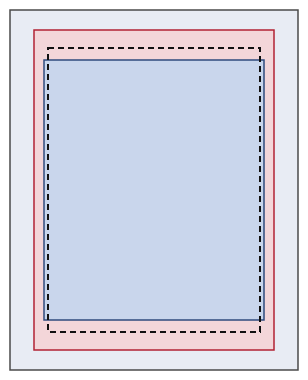
The Foundation gives three numbers: recommended 60 × 80, minimum 55 × 65, maximum 72 × 90. We read that as a short side of 55 to 72 inches and a long side of 65 to 90, whichever way the quilt hangs. By that reading an 80 × 56 flag quilt passes while a 53 × 71 throw does not.
Four other rules decide whether a finished quilt is accepted, and each takes one line:
- It must be quilted by hand or machine. The Foundation says a tied quilt is not acceptable.
- The fabric should be quality, adult-appropriate 100% cotton, with low-loft batting. Red, white and blue are common, but the Foundation says a Quilt of Valor does not have to be those colors.
- The label must state that it is a Quilt of Valor, with the recipient's name and the names of the piecer, quilter and binder. How to label a quilt covers the sewing, and our quilt label maker lays out the wording.
- If a volunteer longarm quilter will quilt it, the backing must be 8 inches wider and 8 inches longer than the top.
The full list, with binding and washing, is on our Quilts of Valor requirements page. Sizes for other programs are in the charity quilt size guide.
Patterns that fit as written
Sizes come from each pattern page. A pattern with a size table lists the version closest to the recommended 60 × 80.
| Pattern | Finished size | In range? | Closest to 60 × 80 |
|---|---|---|---|
| Patriotic star throw | 58 × 70 in | Yes | 4 × 6 blocks with a 4-inch border: 56 × 80 |
| Double Irish chain | 58 × 78 in | Yes | 5-inch border instead of 4: 60 × 80 (details below) |
| Log cabin | 60 × 72 in | Yes | 6 × 7 blocks: 72 × 84, at the width limit |
| Rail fence | 58 × 70 in | Yes | As written |
| Layer cake throw | 64 × 73 in | Yes | The 40-square version is 55 × 82, exactly at the minimum width |
| Disappearing nine-patch | 62 × 75 in | Yes | As written |
| Postage stamp scrap | 60 × 72 in | Yes | As written |
| Trip around the world | 71 × 71 in | Yes | One inch under the width limit |
| Bargello | 60 × 70 in | Yes | As written |
| Amish center diamond | 70 × 70 in | Yes | As written |
| Coin quilt (jelly roll) | 56 × 68 in | Yes | 5-inch border instead of 4: 58 × 70. The twin size without a border is 72 × 80 |
Patterns that come up short
Five of our patterns finish under the minimum as written. Each one needs only a wider border or a different size from its own page.
| Pattern | As written | Problem | Fix | Result |
|---|---|---|---|---|
| Nine-patch throw | 53 × 71 in | 2 in too narrow | 6-inch border instead of 4 | 57 × 75 in |
| American flag | 76 × 52 in | Short side is 3 in under | Add a 2-inch border all around | 80 × 56 in (read as 56 × 80) |
| Charm pack zigzag | 56 × 64 in | 1 in too short | 5-inch border instead of 4 | 58 × 66 in |
| Jelly roll race | about 48 × 64 in | Too narrow and 1 in short | 6-inch border | about 60 × 76 in |
| Fat quarter brick | 56 × 64 in | 1 in too short | Use the 64 × 88 or 72 × 80 size on that page | 64 × 88 or 72 × 80 in |
The border arithmetic is the same each time. Subtract the finished size you have from the one you want, halve the difference, and that is the finished border width on each side. Cut the strips ½ inch wider. Our quilt border calculator and the guide to adding borders cover strip counts and measuring through the middle. Here are the numbers for the four border fixes, worked out for a 40-inch usable fabric width.
| Quilt | Border strips | Border fabric | Binding | Backing | Batting |
|---|---|---|---|---|---|
| Nine-patch, 57 × 75 | 7 strips, 6½ in | 1⅜ yd | 8 strips, ⅝ yd | Two 83-in lengths, 4⅝ yd | Twin (72 × 90) |
| Flag, 80 × 56 | 7 strips, 2½ in | ⅝ yd | 8 strips, ⅝ yd | Two 88-in lengths, 5 yd | Full (81 × 96) |
| Zigzag, 58 × 66 | 7 strips, 5½ in | 1⅛ yd | 7 strips, ⅝ yd | Two 66-in lengths, 3¾ yd | Twin (72 × 90) |
| Double Irish chain, 60 × 80 | 7 strips, 5½ in | Navy for everything (chain squares, border, binding): 2¾ yd | 8 strips, 2½ in | Two 88-in lengths, 5 yd | Twin (72 × 90) |
Replace the original border, binding and backing amounts on each pattern page with these. The jelly roll race border figures (7 strips cut 6½ inches, 1⅜ yd) are on its page.
Leave a margin above the minimum
The Foundation's range applies to the finished quilt, and quilting draws a top in. A top planned at exactly 55 inches wide can measure less than that after quilting and binding, with the loss depending on the batting and how dense the stitching is. Anything in the first table that is 58 inches wide or more has at least 3 inches to spare on the short side. The 56-inch versions (the star with 4 × 6 blocks, the coin quilt with its default border) have 1 inch, and the 55-inch layer cake version has none, so give those a wider border. Measure the finished quilt across the middle before you label it.
Which one to make
For a first Quilt of Valor, the rail fence and the patriotic star throw are the safe choices. Both finish at 58 × 70, and the rail fence is strip piecing with no points to match. If you want a simple top that reads as patriotic without much sewing, the flag quilt with its extra border does that, though it takes 50 fused stars. The log cabin and postage stamp quilts take the most time. The coin quilt and the layer cake throw take the least, because both start from precuts: a patriotic jelly roll or layer cake saves the cutting.
The double Irish chain at 60 × 80 is the one pattern here that matches the Foundation's recommended size exactly. It also takes more fabric than most, which is worth knowing before you buy navy.
Before you finish it
Baste with a margin, quilt it by hand or machine (not tied), and bind it. Use the same 4 inches of extra backing on every side whether or not a longarm volunteer will be involved, since that is the 8 inches the Foundation asks for. Add the label before the binding is sewn down so the label's edges are caught in it. Where to donate quilts explains how to give a finished quilt to a local group or state coordinator, and the Foundation's pages explain how to report an award you present yourself.
WTCQuilt.com began as the 9-11 Memorial Quilt Project, volunteers stitching squares to honor people and places struck on September 11. Read that story. A Quilt of Valor is the same kind of gift, made one person at a time. See all our free quilt patterns.
You might also like
 Quilts of Valor: requirements and how to make oneThe Foundation's size, fabric and label rules in plain English, plus a pattern that fits them.
 Patriotic star throw quilt20 red and navy sawtooth stars in a 58 x 70 in throw, sized to fit the Quilts of Valor range.
 How to make a quilt from a fabric panelSquaring a pre-printed panel that's off-grain, border math for two common panel sizes, and quilting around the printed picture.
 Quilt label makerType the details, pick a style (simple, star border, memorial, Quilt of Valor, signature) and print at true size on fabric sheets or paper for tracing.