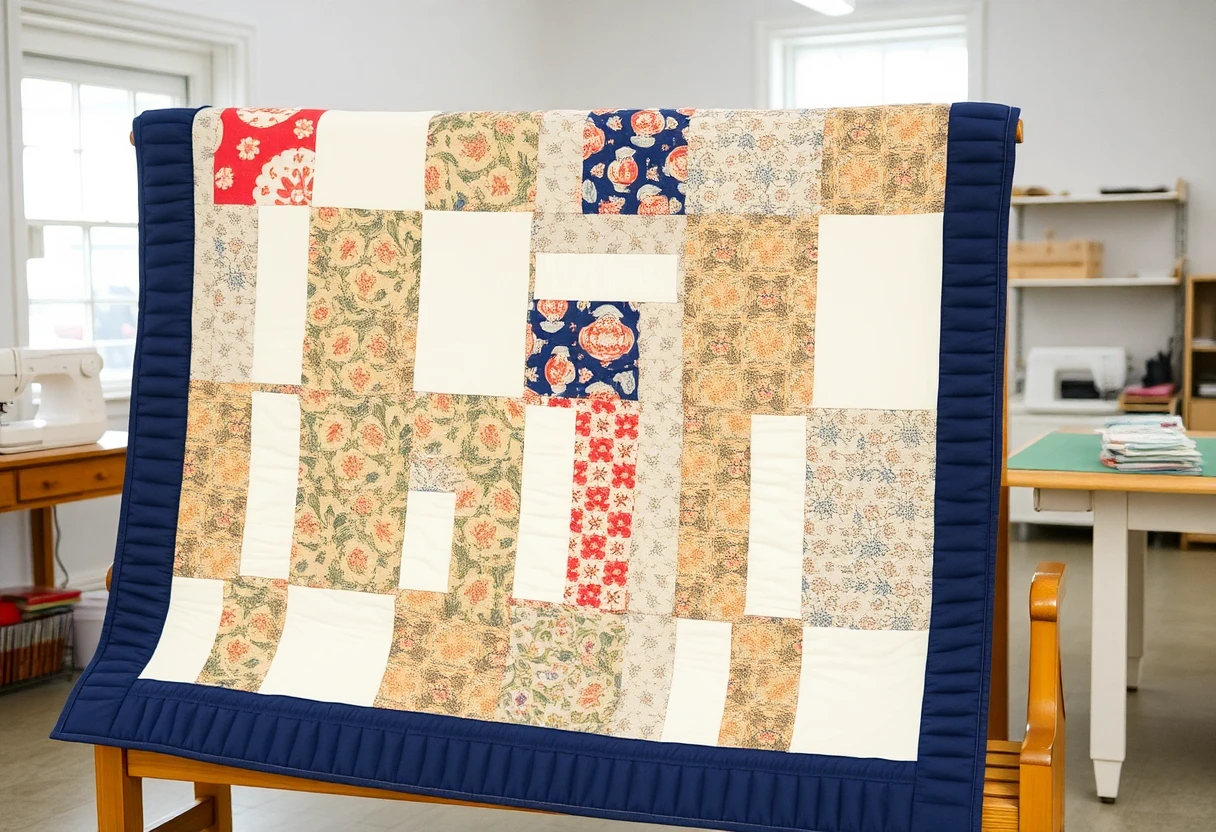
Before and after
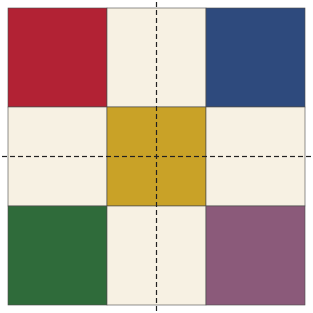
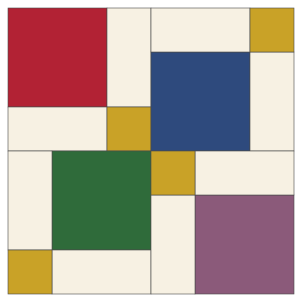
Each quarter you cut is a 7-inch square holding one whole print square, two cream rectangles (halves of the side squares) and one small quarter of the gold center. Turning two of the quarters moves their big squares toward the middle and sends a small gold square out to the corner, and that broken symmetry is the whole look.
Fabric
| Fabric | Used for | Amount |
|---|---|---|
| Prints | 100 squares, 5 in (corners and centers) | 3 charm packs, or about 2 yd of scraps |
| Light (cream or white) | 80 squares, 5 in (sides) | 1¾ yd |
| Border | Seven 5½-in strips | 1⅛ yd |
| Binding | Eight 2½-in strips | ⅝ yd |
| Backing | Two 83-in lengths, seamed | 4¾ yd |
| Batting | At least 70 × 83 in | Twin size (72 × 90 in) |
Charm packs usually hold 40 or 42 squares, so three packs leave a few spares for swapping out any print that fights with its neighbors. Many charm squares have pinked (zigzag) edges; measure from the tips of the zigzag, and line up the tips with your seam guide. The precut fabric guide has more on charm packs.
Cutting
- Prints: you need 100 squares, 5 × 5 inches. Use them straight from the charm packs, or cut 5-inch strips from scraps and subcut squares.
- Light: cut 12 strips 5 inches × the width of the fabric. Subcut 7 squares from each strip for 84 (you need 80).
- Border: cut 7 strips 5½ inches × the width of the fabric.
- Binding: cut 8 strips 2½ inches × the width of the fabric.
Sew the nine-patches
- For each block, choose 5 prints: 4 for the corners and 1 for the center. The center print is the one that ends up as small squares, so a strong color there shows up well.
- Lay out three rows. Row 1: print, light, print. Row 2: light, center print, light. Row 3: print, light, print.
- Sew the squares into rows with a ¼-inch seam. Press the seams toward the prints in rows 1 and 3 and toward the center print in row 2, so they nest.
- Join the rows. The nine-patch should measure 14 inches square. If it is smaller, check your seam allowance with the test in how to sew a quarter-inch seam; a slightly narrow nine-patch still works, but every block must be the same size.
- Make 20 nine-patches.
Cut and turn
- Lay a nine-patch on the mat. Measure 7 inches from the left edge and cut top to bottom. The cut should run through the exact middle of the center square and the top and bottom light squares.
- Without moving the pieces apart, measure 7 inches from the top edge and cut across. You now have four 7-inch squares.
- Turn the upper right quarter half way around (180 degrees), and do the same with the lower left quarter. The upper left and lower right quarters stay as they are. Their big print squares stay at the outer corners; the two turned quarters now have their big squares beside the middle of the block.
- Sew the top two quarters together, then the bottom two, then join the halves. Press. The block should measure 13½ inches square.
- Repeat for all 20 blocks. Cut and turn one block at a time, so the quarters don't get mixed up.
The cuts are on the straight grain, so they don't stretch. They do cut through the ends of the nine-patch seams, but there's no need to backstitch: the new seams cross those ends and hold them.
Lay out and finish
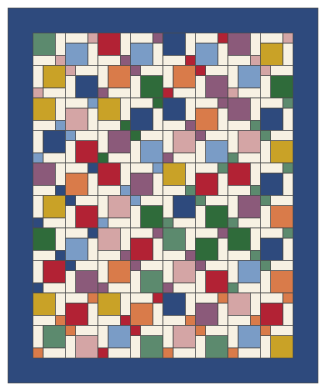
Lay out 5 rows of 4 blocks, all turned the same way as in the diagram. Turning every other block a quarter turn is a popular variation; it makes the light rectangles form a loose lattice. Photograph a few arrangements before you choose. Sew the blocks into rows, pressing alternate rows in opposite directions, and join the rows. The center measures 52½ × 65½ inches.
Join the border strips end to end. Cut two side borders 65½ inches long and sew them on, then two top and bottom borders 62½ inches long. Measure your own top through the middle before cutting; if it differs from these numbers, use your measurement. How to add borders explains why.
Sew the two 83-inch backing lengths together along the long edges (about 79 × 83 inches; the quilt needs 70 × 83). Layer, baste and quilt. An allover meander suits a busy scrappy top; straight lines through the light rectangles suit a calmer one. Bind with the eight 2½-inch strips (the perimeter is 274 inches, and eight joined strips give about 316).
Other sizes
| Layout | Nine-patches | Print squares | Light squares | Finished with 5-in border |
|---|---|---|---|---|
| 3 × 3 | 9 | 45 | 36 | 49 × 49 in (baby or wall) |
| 3 × 4 | 12 | 60 | 48 | 49 × 62 in (lap) |
| 4 × 5 (this pattern) | 20 | 100 | 80 | 62 × 75 in (throw) |
| 5 × 6 | 30 | 150 | 120 | 75 × 88 in (twin) |
| 6 × 7 | 42 | 210 | 168 | 88 × 101 in (queen) |
The 3 × 4 lap size is a good size for a charity quilt; see where to donate quilts. If you've made our nine-patch throw, this is the natural next step: the same block, cut up. The charm pack zigzag is another way to use up charm squares.
More free patterns: see them all. This pattern is free for personal and charity use; please don't sell the pattern itself.
You might also like
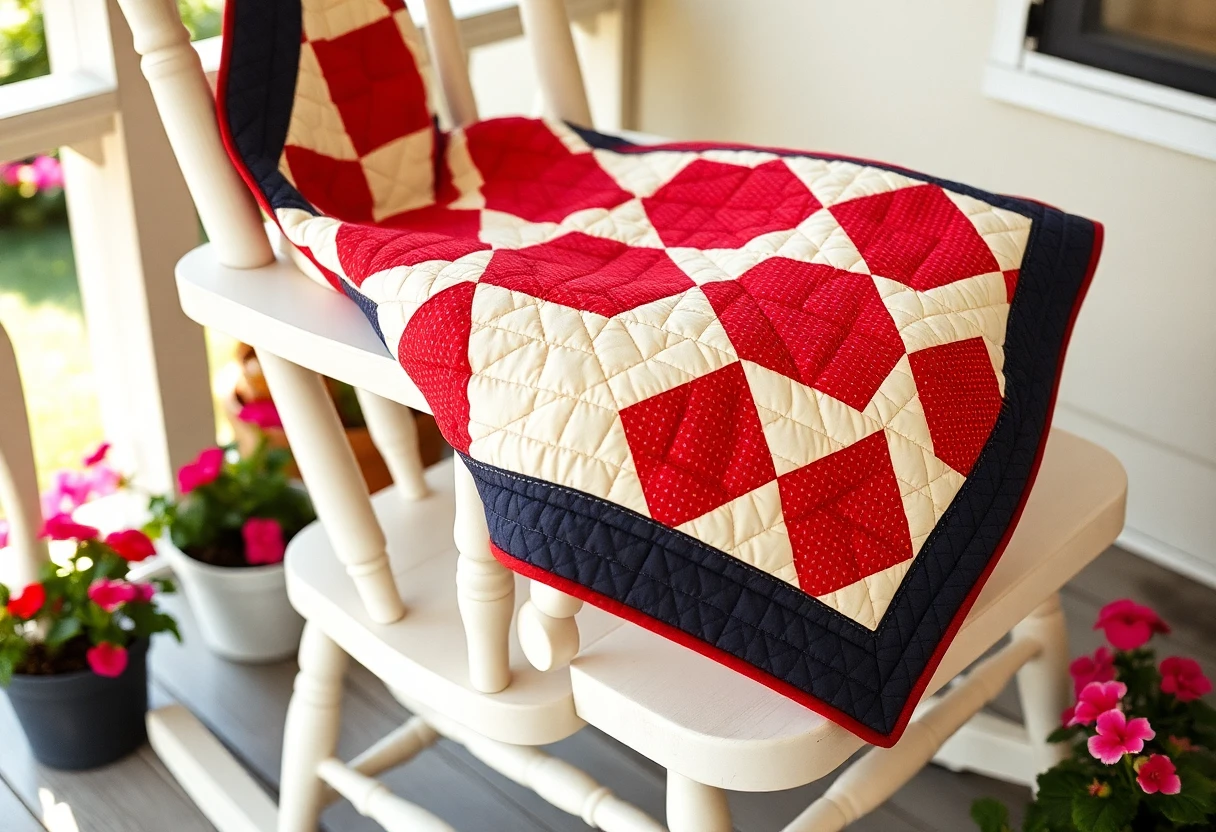 Nine-patch throw quiltThe classic first quilt, a 53 x 71 in throw with only squares to cut and sew.
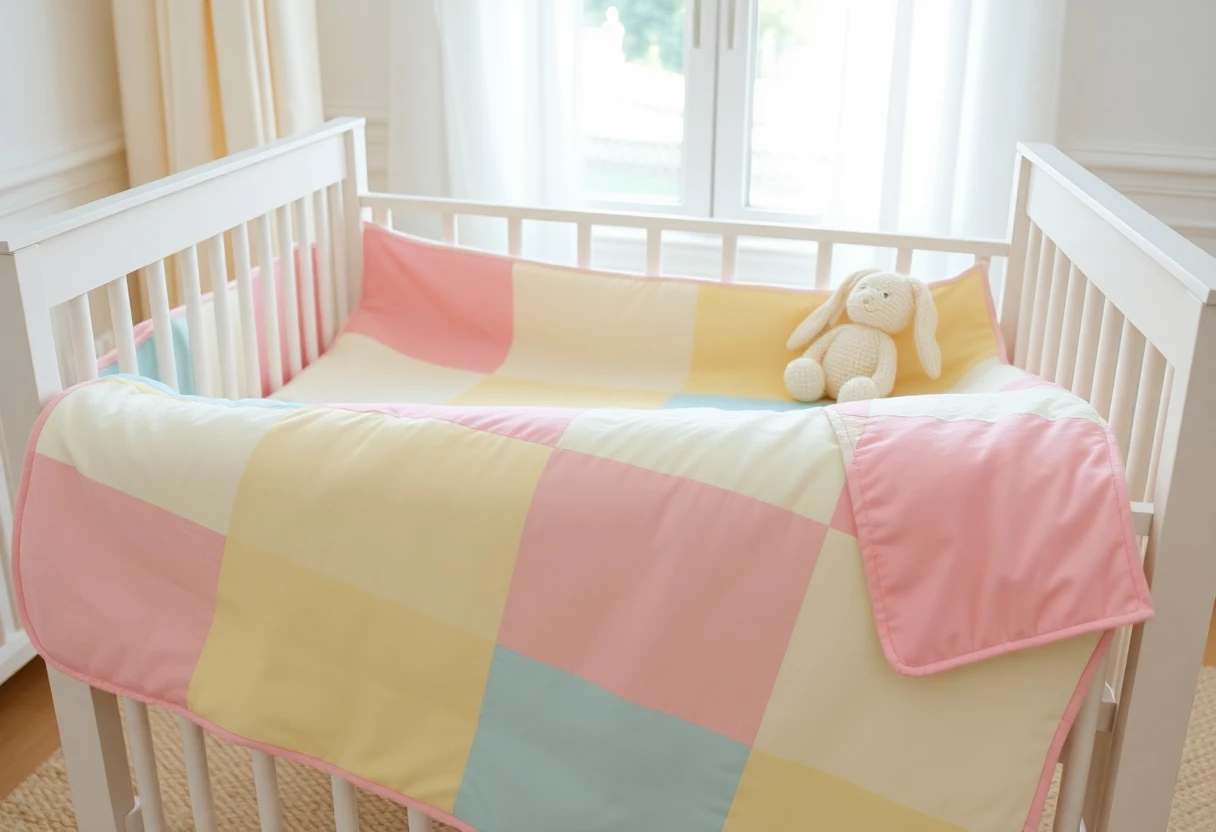 Easy baby quilt48 big squares from 8 fat quarters, 36 x 48 in, with crib, toddler and throw sizes.
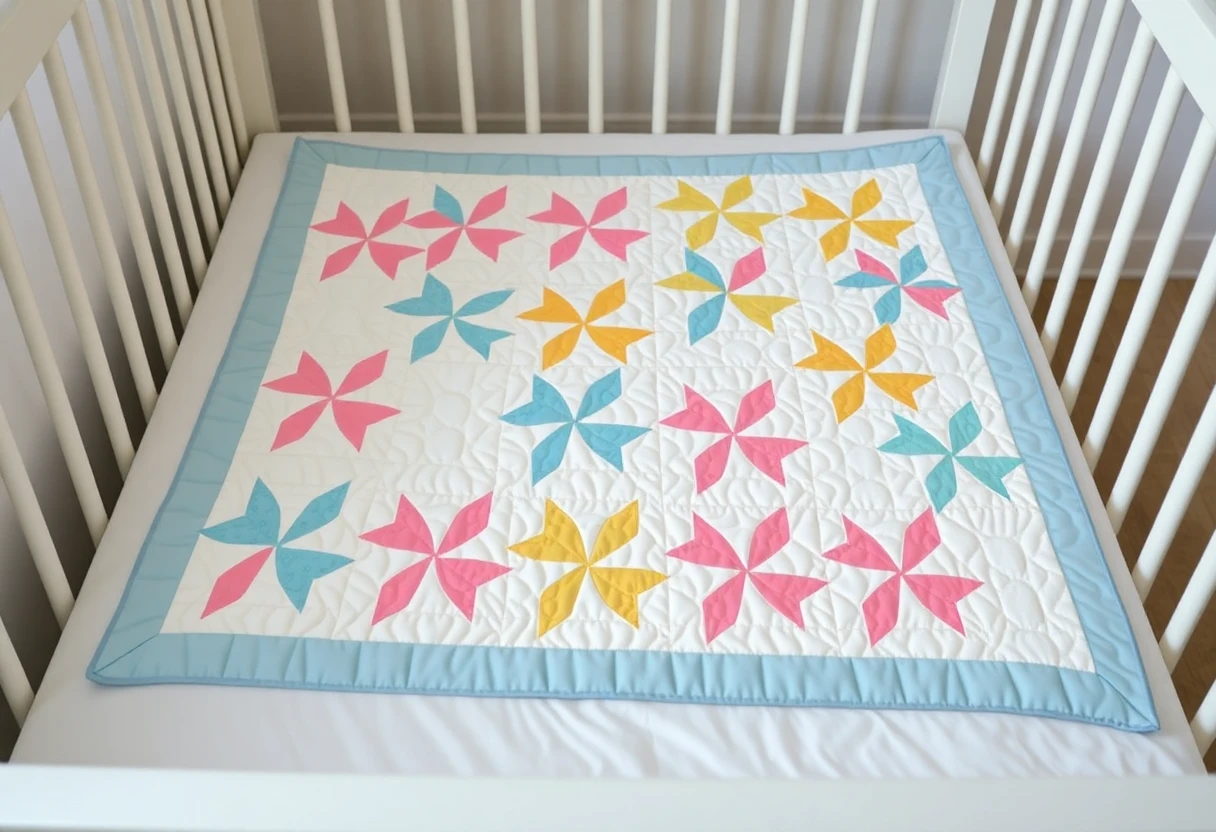 Pinwheel baby quiltOne charm pack, 20 pinwheels, 38 x 46 in, a step up from a squares-only baby quilt.
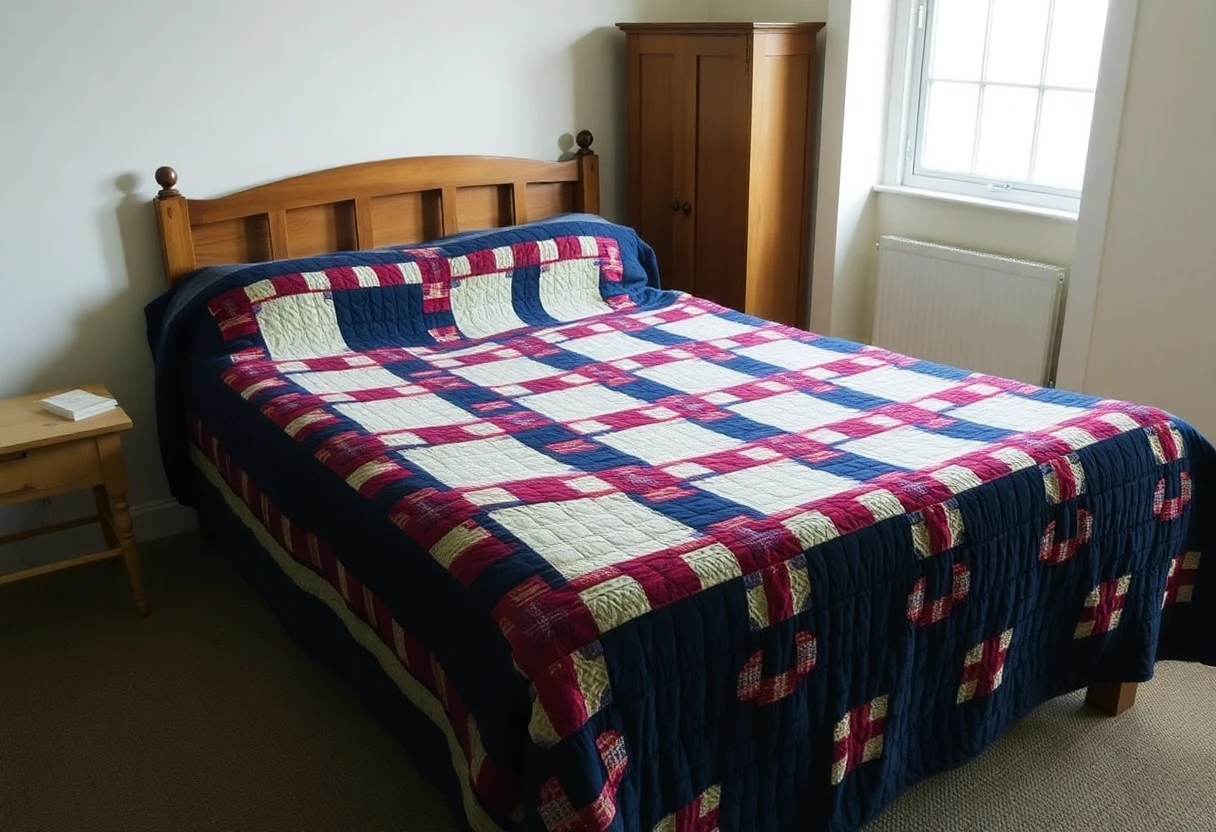 Double Irish chain quiltNavy and red chains on cream, 58 x 78 in, strip pieced so there are no tiny squares to cut one by one.