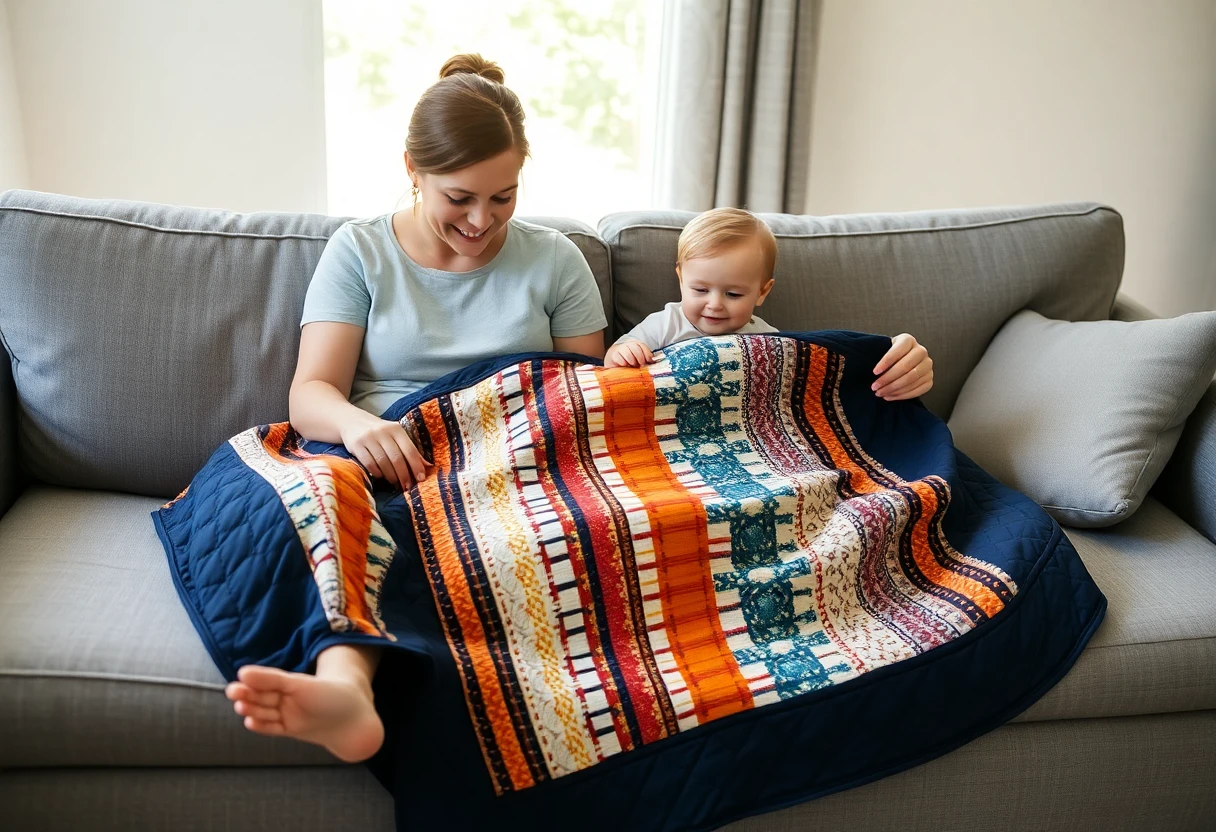
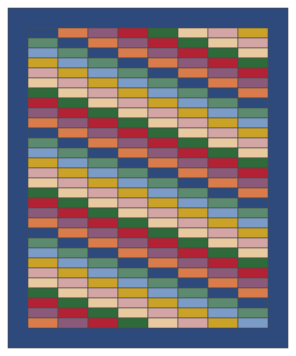
Coin quilt or race quilt?
Both use a jelly roll and finish in a day or two. The jelly roll race quilt is faster, because it is one very long seam folded back on itself, but its width depends on how long your strips are and its seams land wherever they land. The coin quilt takes more pressing and more pinning. In return the size is exact, the columns line up in a grid, and you decide where each color goes. If you want straight rows of color that look planned, make the coin quilt. If you want the quickest top and don't mind staggered stripes, make the race quilt.
Sizes
Every coin is cut 6½ × 2½ inches and finishes 6 × 2. The sizes differ only in how many columns and how many coins tall. Because a strip set of ten strips makes ten coins in each segment, the counts come out even.
| Size | Columns × coins | Center | Border | Finished | Strips used | Strip sets of 10 | Segments |
|---|---|---|---|---|---|---|---|
| Baby or lap | 6 × 20 | 36 × 40 in | 4 in (cut 4½) | 44 × 48 in | 20 (half a roll) | 2 | 12 (2 per column) |
| Throw (this pattern) | 8 × 30 | 48 × 60 in | 4 in (cut 4½) | 56 × 68 in | 40 (one roll) | 4 | 24 (3 per column) |
| Twin | 12 × 40 | 72 × 80 in | 3 in (cut 3½) | 78 × 86 in | 80 (two rolls) | 8 | 48 (4 per column) |
The throw uses all 40 strips with none spare. The baby quilt leaves 20, enough for a second one. Add a few extra 2½-inch strips from stash fabric if you want a margin.
Fabric
| Item | Baby | Throw | Twin |
|---|---|---|---|
| Jelly roll (40 strips, 2½ in) | ½ roll (20 strips) | 1 roll | 2 rolls |
| Border | 5 strips, ¾ yd | 7 strips, 1 yd | 9 strips, 1 yd |
| Binding | 6 strips, ½ yd | 7 strips, ⅝ yd | 9 strips, ¾ yd |
| Backing | Two 52-in lengths, 3 yd | Two 64-in lengths, 3⅝ yd | Three 86-in lengths, 7¼ yd |
| Batting | Throw size (60 × 60 in) | Twin size (72 × 90 in) | Queen size (90 × 108 in) |
Binding strips are cut 2½ inches wide; border strips use the cut width from the sizes table. A twin batt such as Warm & Natural twin covers the throw with 4 inches to spare on every side. For other sizes, StitchTested has a binding and backing calculator and a quilt size chart.
Check your strips first
Six coins at 6½ inches use 39 inches of a strip. Most jelly roll strips run 40 to 44 inches after you trim the selvage end, so there is an inch or more to spare, but measure a few before you start. If your strips are under 39 inches, a strip set gives only five segments, and you will need one more set. Cut its ten strips from stash fabric, about ¾ yd.
Many jelly rolls hold two strips of every print. Shuffle them before you build the strip sets, and keep two strips of the same print out of the same set, or the pair will show up twice in every segment.
Make the strip sets
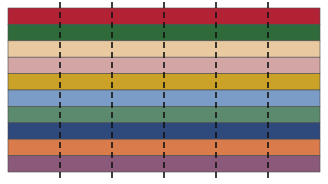
- Deal the strips into stacks of ten: 2 stacks for the baby quilt, 4 for the throw, 8 for the twin. Label the stacks A, B, C and so on.
- Sew each stack's ten strips together along the long edges with a ¼-inch seam. Sew the first seam top to bottom, the next bottom to top, and keep alternating; sewing every seam in the same direction makes a strip set bow. A finished set is 20½ inches tall.
- Press all the seams in one set the same way, toward the bottom strip. Hold the set as you pressed it: this is "as cut" from now on.
- Trim the left end square, then cut six segments, each 6½ inches wide. Each segment is a stack of ten coins.
Build the columns
A column is 2, 3 or 4 segments sewn end to end. To keep the same print from sitting beside itself, give each column a different order of sets. For the throw, build the columns top to bottom from these sets:
| Column | 1, 5 | 2, 6 | 3, 7 | 4, 8 |
|---|---|---|---|---|
| Top segment | A | B | C | D |
| Middle segment | B | C | D | A |
| Bottom segment | C | D | A | B |
Each set is used six times, and no two neighboring columns use the same set at the same height. The baby quilt alternates A over B with B over A. The twin has eight sets: column 1 takes A, C, E, G from top to bottom, column 2 takes B, D, F, H, column 3 takes C, E, G, A, and so on, moving one letter each column.
Before you sew, turn the segments for every even column (2, 4, 6, 8) end for end. This flips their pressed seams to point up instead of down, so that when two columns meet the seam allowances face each other and the seams nest. Join the segments in each column, then press those joining seams toward the bottom in odd columns and toward the top in even columns. A finished column measures 40½ (baby), 60½ (throw) or 80½ inches (twin). If one is off by ½ inch, a seam is too wide or too narrow somewhere.
Join the columns and add the border
- Lay the columns out and check the order. Look for two matching prints touching at a side or top and bottom, and swap a segment if there are any.
- Sew the columns together with a ¼-inch seam, pinning at every crossing so the coin seams meet. There are 19 crossings on a baby seam, 29 on the throw and 39 on the twin. Press the vertical seams all one way or open. The center measures 36½ × 40½ (baby), 48½ × 60½ (throw) or 72½ × 80½ inches (twin).
- Join the border strips end to end. Cut two pieces for the sides and two for the top and bottom, measuring through the middle of your own top first.
| Size | Sides (2) | Top and bottom (2) | Cut width |
|---|---|---|---|
| Baby | 40½ in | 44½ in | 4½ in |
| Throw | 60½ in | 56½ in | 4½ in |
| Twin | 80½ in | 78½ in | 3½ in |
Sew the sides first, then the top and bottom. How to add borders to a quilt explains why you measure through the middle, not along the edge.
Quilt and finish
Seam the backing lengths side by side, layer and baste, and quilt. Every coin seam is 2 inches apart, so stitching in the ditch of every other seam puts lines 4 inches apart, which suits most cotton battings. Check the batting package; the batting guide explains spacing. Vertical lines down the column seams are 6 inches apart. A walking foot and straight-line quilting across the coins in both directions makes a grid that echoes the pieces. Bind it with the strips in the table above.
Make it a Quilt of Valor
The throw is 56 inches wide, only 1 inch over the Foundation's 55-inch minimum, and quilting draws a top in. For a Quilts of Valor version, use a 5-inch border (cut 5½ inches): 7 strips, 1⅛ yd, a 58 × 70 inch quilt. The sides are 60½ inches and the top and bottom 58½. Binding stays at 7 strips and backing becomes two 66-inch lengths (3¾ yd). The twin size without its border is 72 × 80 inches, inside the Foundation's range. A patriotic jelly roll makes it a red, white and blue quilt.
Variations
- Sashing: classic coin quilts put a solid strip between the columns. It changes the width, so use our sashing calculator to get the new size.
- One color family: sort the strips from light to dark and sew each set in order for a gradient that runs down the quilt.
- No jelly roll: forty strips cut 2½ × 40 inches from yardage work the same. The precut fabric guide shows what else comes in a jelly roll's family.
Every size was checked by calculation. See all our free quilt patterns. This pattern is free for personal and charity use; please don't sell the pattern itself.
Products on this page
Photos and prices come from Amazon and can change.
 Warm and Natural Cotton Batting Twin 72 x 90Check price on Amazon
You might also like
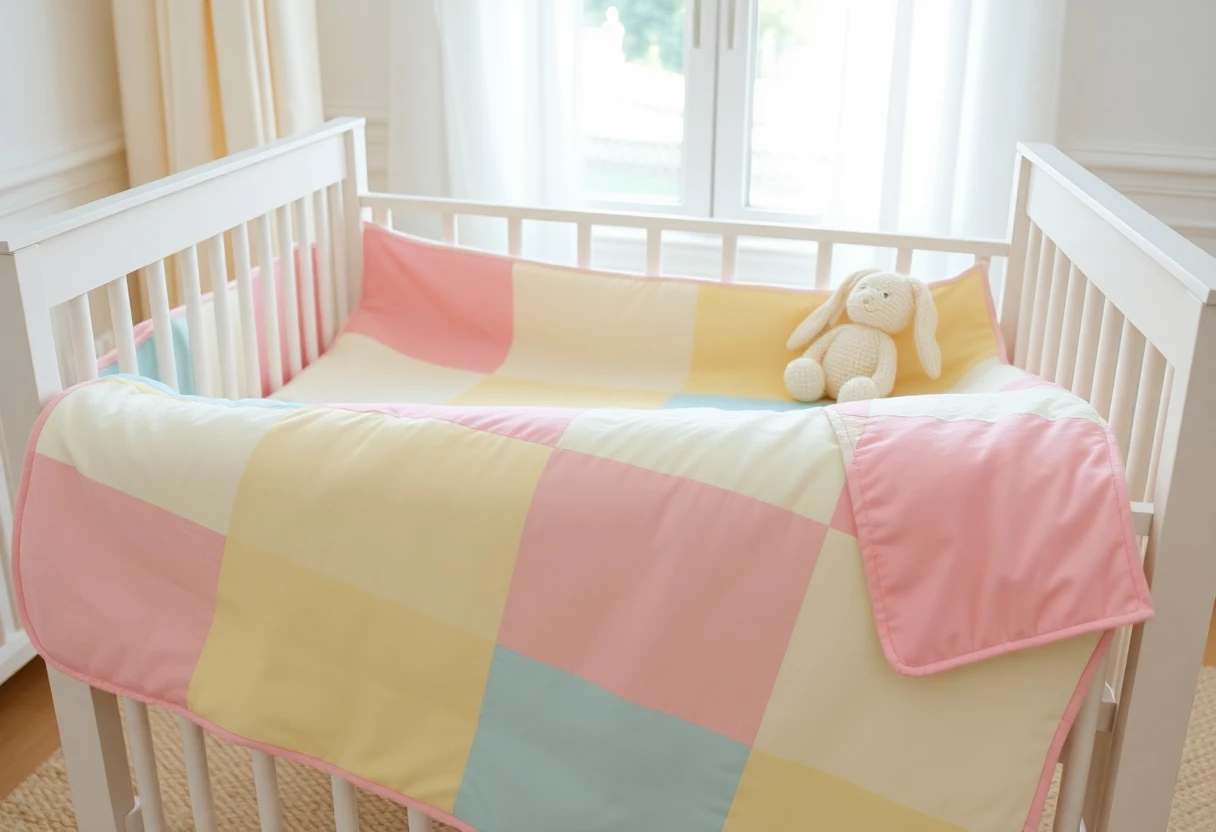 Easy baby quilt48 big squares from 8 fat quarters, 36 x 48 in, with crib, toddler and throw sizes.
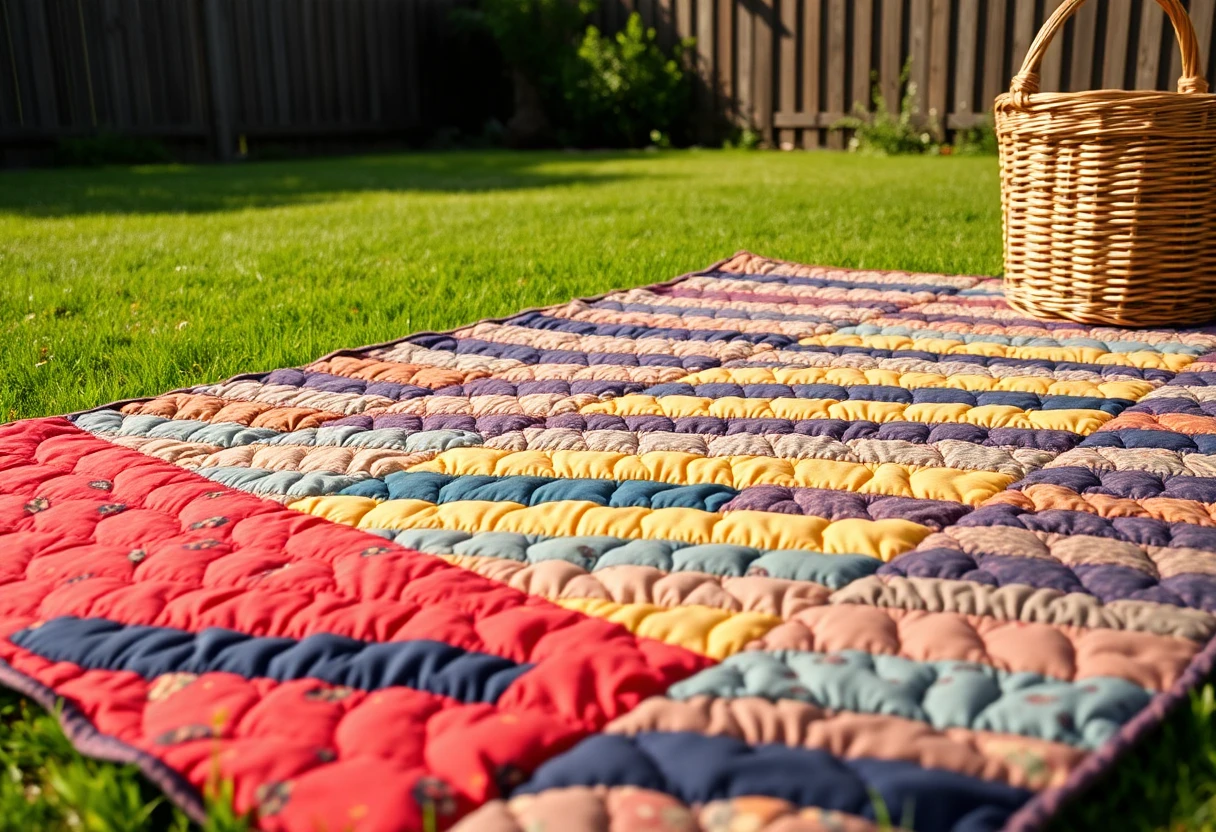 Jelly roll race quiltOne jelly roll, one long seam at a time; a top about 49 x 64 in, in a few hours.
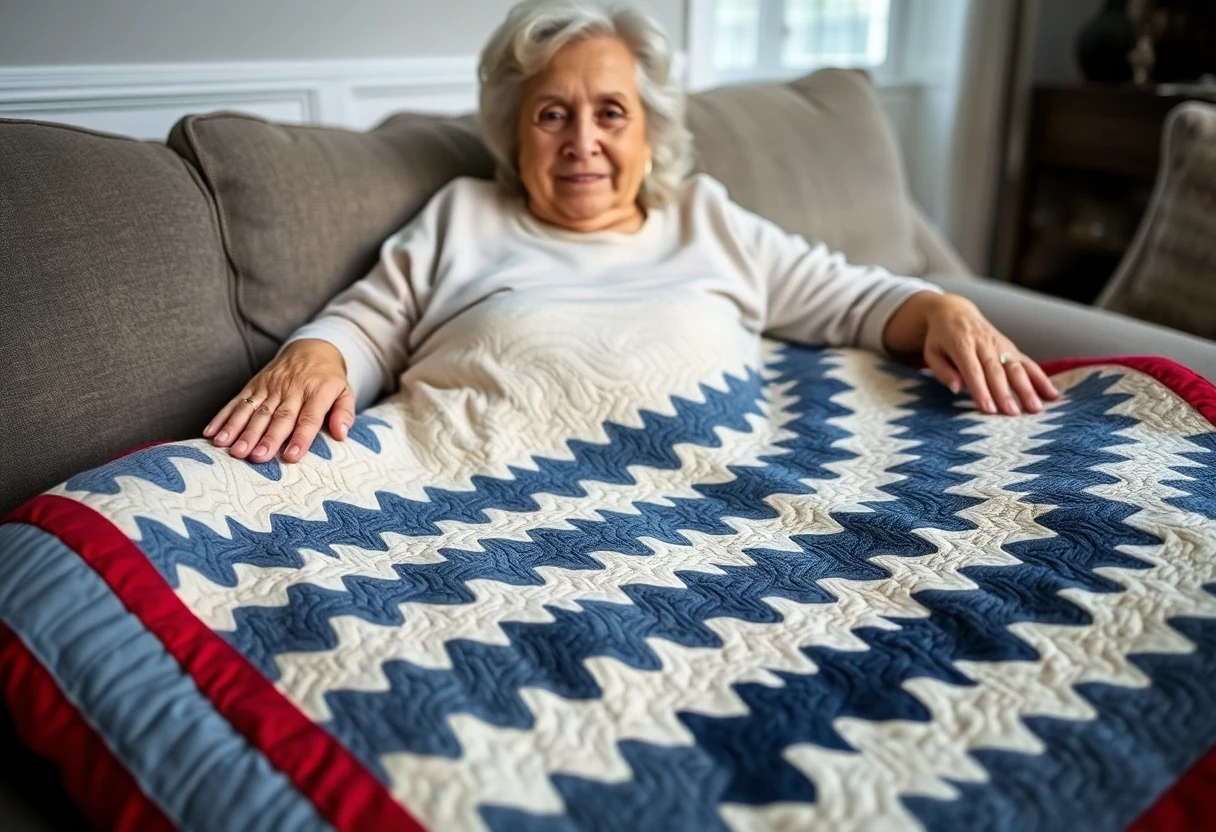 Rail fence quiltThree strips sewn together and turned every other block, a zigzag throw of 58 x 70 in that works from a jelly roll.
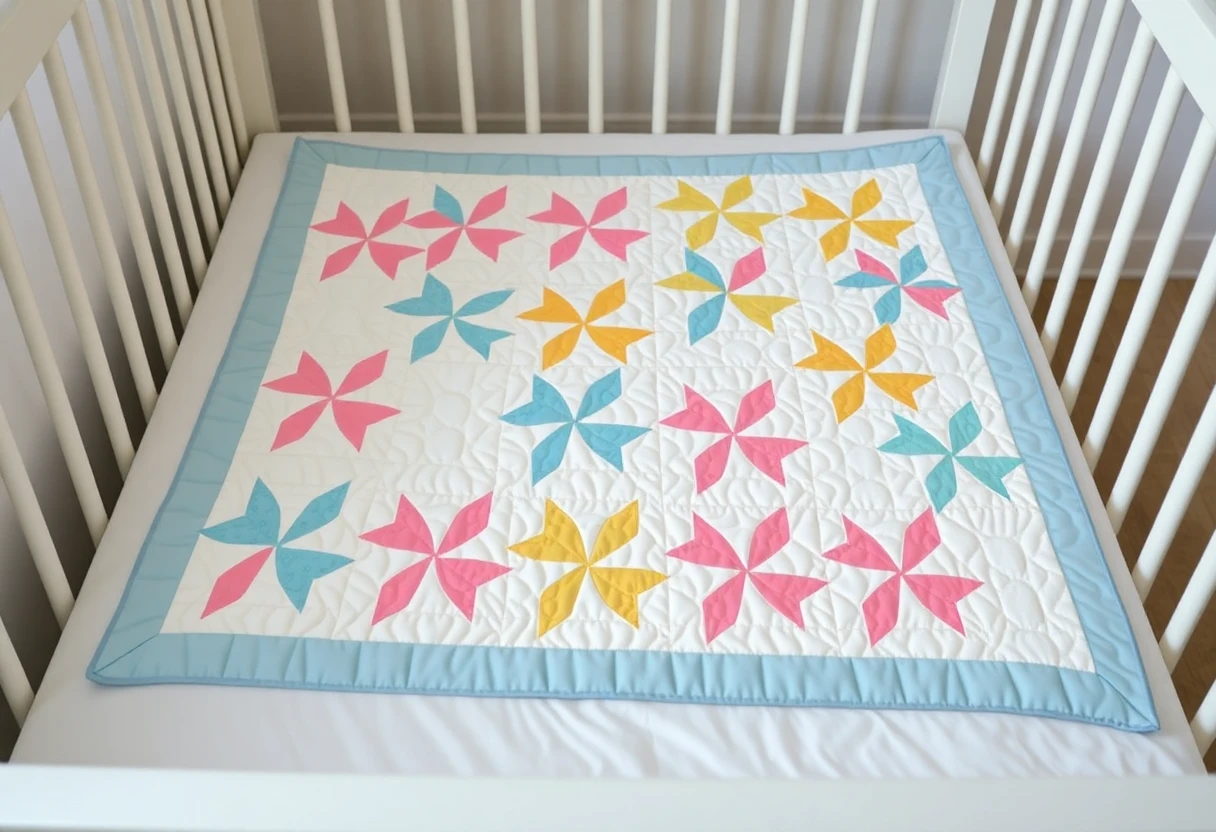 Pinwheel baby quiltOne charm pack, 20 pinwheels, 38 x 46 in, a step up from a squares-only baby quilt.