Why the grid matters
Most traditional blocks are drawn on a grid of equal squares, and the grid decides which finished sizes are easy. Divide the block size by the number of grid squares across and you get the size of one square; if that lands on a whole, half or quarter inch, every cut lands on a ruler line.
| Grid | Squares across | Easy finished sizes | Blocks here |
|---|---|---|---|
| Four-patch | 2 or 4 | 4, 6, 8, 12, 16 in | pinwheel, bow tie, sawtooth star, Dutchman's puzzle, storm at sea |
| Nine-patch | 3 (or 6) | 6, 9, 12 in | Ohio star, churn dash, friendship star, shoofly, card trick, Jacob's ladder, single Irish chain |
| Five-patch | 5 | 7½, 10, 12½, 15 in | sister's choice |
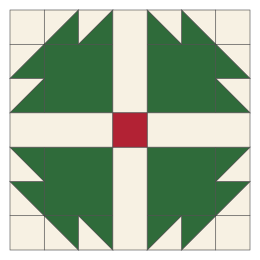
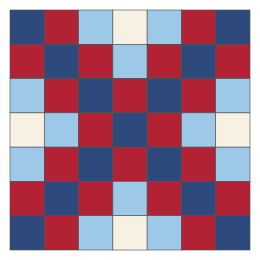
| Seven-patch | 7 | 7, 10½, 14 in | bear's paw, triple Irish chain |
A 12-inch block is easy in a nine-patch (4-inch units) or a four-patch (3-inch units), but awkward in a five-patch (2.4 inches) or a seven-patch (1.71 inches). That's why seven-patch charts use 10½ and 14 inches. Our quilt block resizer does the arithmetic for several of these blocks at any size and warns when a cut falls between ruler lines, and the half-square triangle calculator sizes the triangle squares most of them use.
Start with the units
Three units turn up in almost every pieced block. Learn them first and the blocks below are mostly a matter of layout.
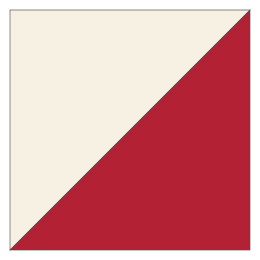 Half-square trianglesTwo triangles in a square, made two, four or eight at a time; the unit in most blocks here.
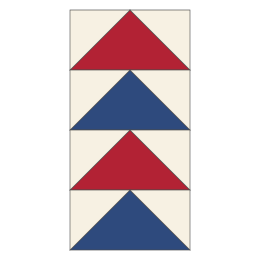 Flying geeseA rectangle twice as wide as tall; the points of the sawtooth star and the Dutchman's puzzle.
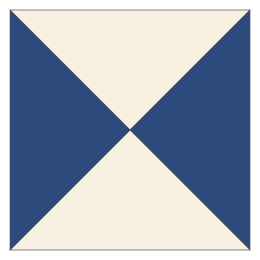 Hourglass (quarter-square triangles)Four triangles meeting in the middle; the star points of the Ohio star.
Four-patch blocks
Two or four squares across. The simplest grids, and the most forgiving about size.
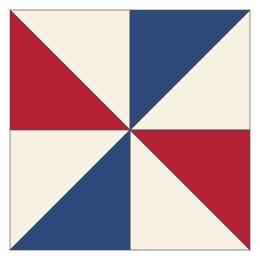 PinwheelFour half-square triangles turning around the center; any whole-inch size works.
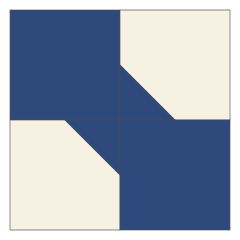 Bow tieFour squares and two stitch-and-flip corners; a classic for necktie memory quilts.
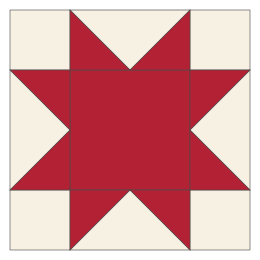 Sawtooth starA big center square with four flying geese points, on a 4 × 4 grid.
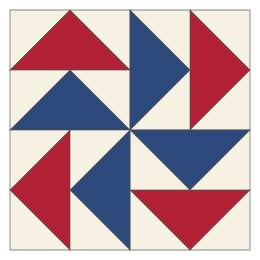 Dutchman's puzzleEight flying geese in pairs, spinning like a pinwheel.
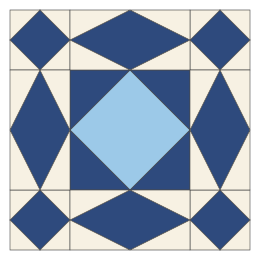 Storm at seaSquares in squares and long diamonds whose straight seams make curving waves across a quilt.
Nine-patch blocks
Three squares across: the biggest family of traditional blocks. Sizes that divide by 3 cut cleanly.
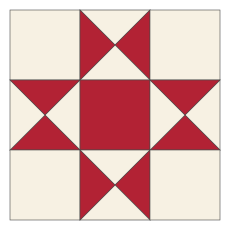 Ohio starAn eight-point star with quarter-square triangle points.
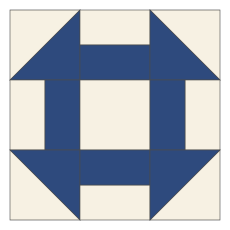 Churn dashTriangle corners and two-strip bars around a plain center.
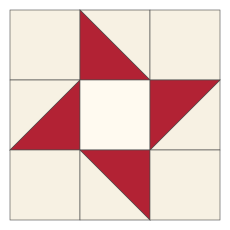 Friendship starFour triangles around a plain center that's big enough for a signature.
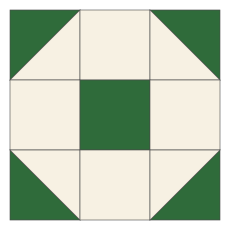 ShooflyA nine-patch with triangle corners; a good first block with triangles.
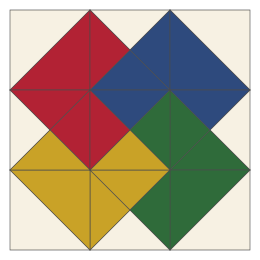 Card trickFour fabrics placed so they look like overlapping playing cards.
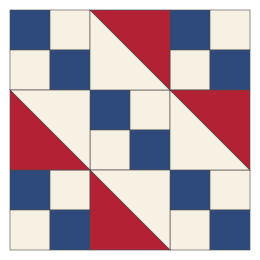 Jacob's ladderFive four-patches and four triangle squares that link into diagonal ladders.
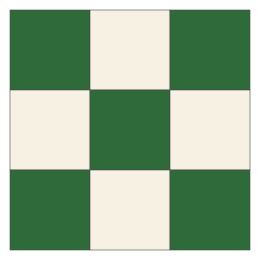 Single Irish chainNine-patches alternating with plain blocks, so the dark squares form chains.
Five-patch blocks
Five squares across. Sizes that divide by 5 are the easy ones; 10 inches, cut from 2½-inch strips, is the easiest.
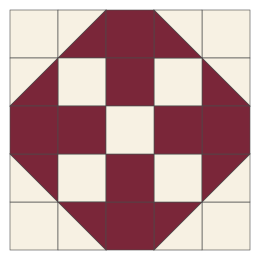
The double Irish chain pattern is also built on a five-patch, with a full quilt's cutting.
Seven-patch blocks
Seven squares across, so the easy sizes are multiples of 3½ inches.
Blocks built from the center out
These don't sit on an even grid. They start with a center and grow by rounds, and the cut sizes come from the round before.
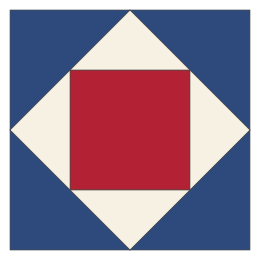 Economy (square in a square)A center framed by two rounds of triangles; a natural frame for a fussy-cut motif.
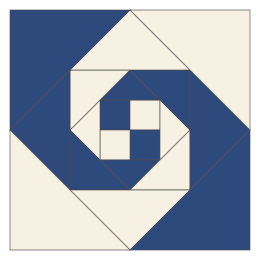 Snail's trailA four-patch and four rounds of two-color triangles that spiral out.
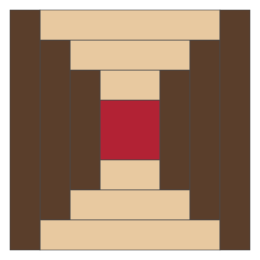 Courthouse stepsThe log cabin variation with logs added in opposite pairs.
The classic log cabin, with logs added in a spiral, is a full pattern: see the log cabin quilt pattern and the log cabin calculator.
Eight-pointed stars with set-in seams
Curved and appliqué blocks
No grid of straight lines here. Drunkard’s path and the double wedding ring are built on curved seams, the Dresden plate is appliquéd onto a background square, and the cathedral window isn’t pieced at all: it’s folded.
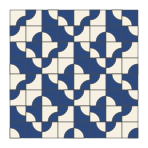 Drunkard's pathA quarter-circle unit with one curved seam, turned to make eight different layouts.
 Dresden plateA ring of wedge-shaped blades appliquéd onto a background with a circle center.
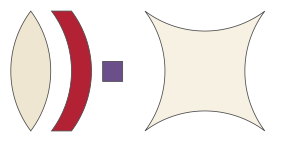 Double wedding ringInterlocking rings of curved arcs, with free true-size templates for a 10-inch ring.
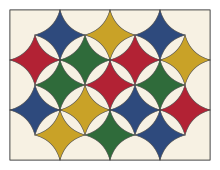 Cathedral windowBackground squares folded into frames, with a contrasting window set into each seam.
Picking a block
| If you want | Try |
|---|---|
| Your first block with triangles | Shoofly, then churn dash or pinwheel |
| A star | Friendship star (easiest), sawtooth, Ohio, then LeMoyne |
| Something fast for a big quilt | Single Irish chain or 14-inch bear's paw |
| A frame for a photo, label or keepsake fabric | Economy, friendship star or churn dash |
| A pattern that only shows across the quilt | Storm at sea, snail's trail, Jacob's ladder |
| To use up scraps | Card trick, courthouse steps, Dresden plate |
Want to make a sampler with one of each? Pick blocks from the same grid family so they come out the same size, or choose a finished size that works for two families (12 inches suits both four-patch and nine-patch blocks), and join them with sashing. The sashing calculator works out the strips, and our guide to making a quilt takes it from there through the binding.
You might also like
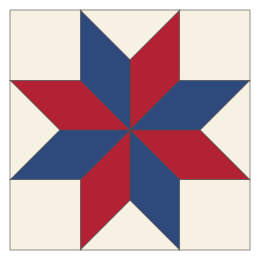 LeMoyne star quilt blockEight 45-degree diamonds with set-in corners, sized by strip width, with every Y-seam step.
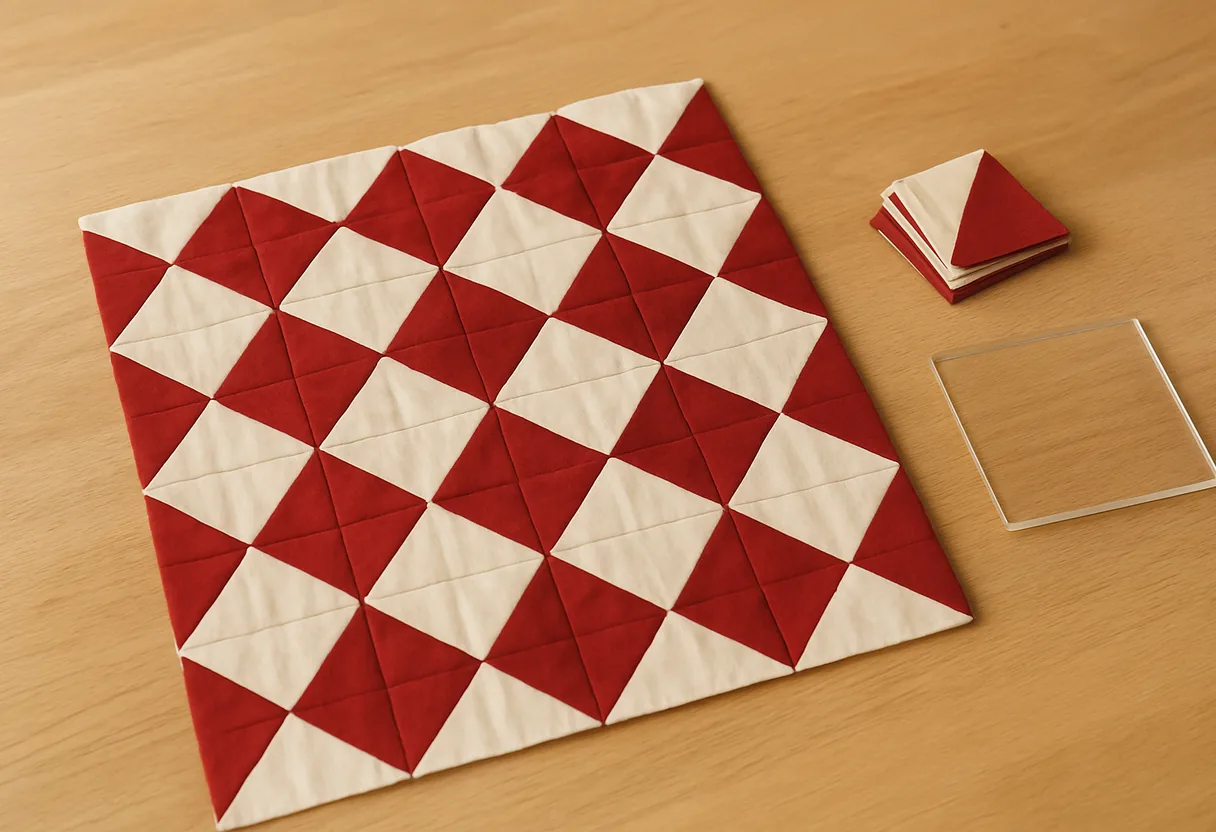 How to make half-square trianglesThe 2-, 4- and 8-at-a-time methods, a cut-size chart for each and how to trim.
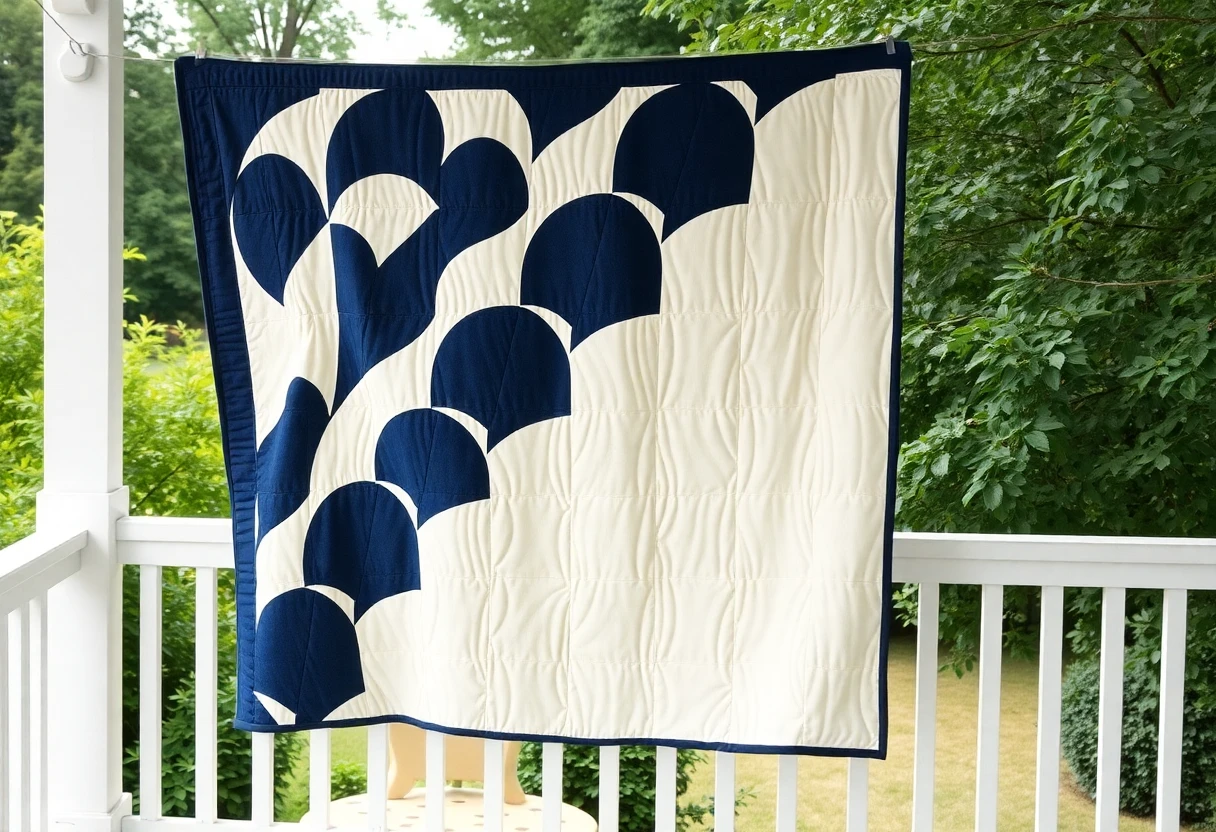 Drunkard's path quilt blockOne quarter-circle unit, a curved seam sewn with pins, and eight layouts from the same pieces.
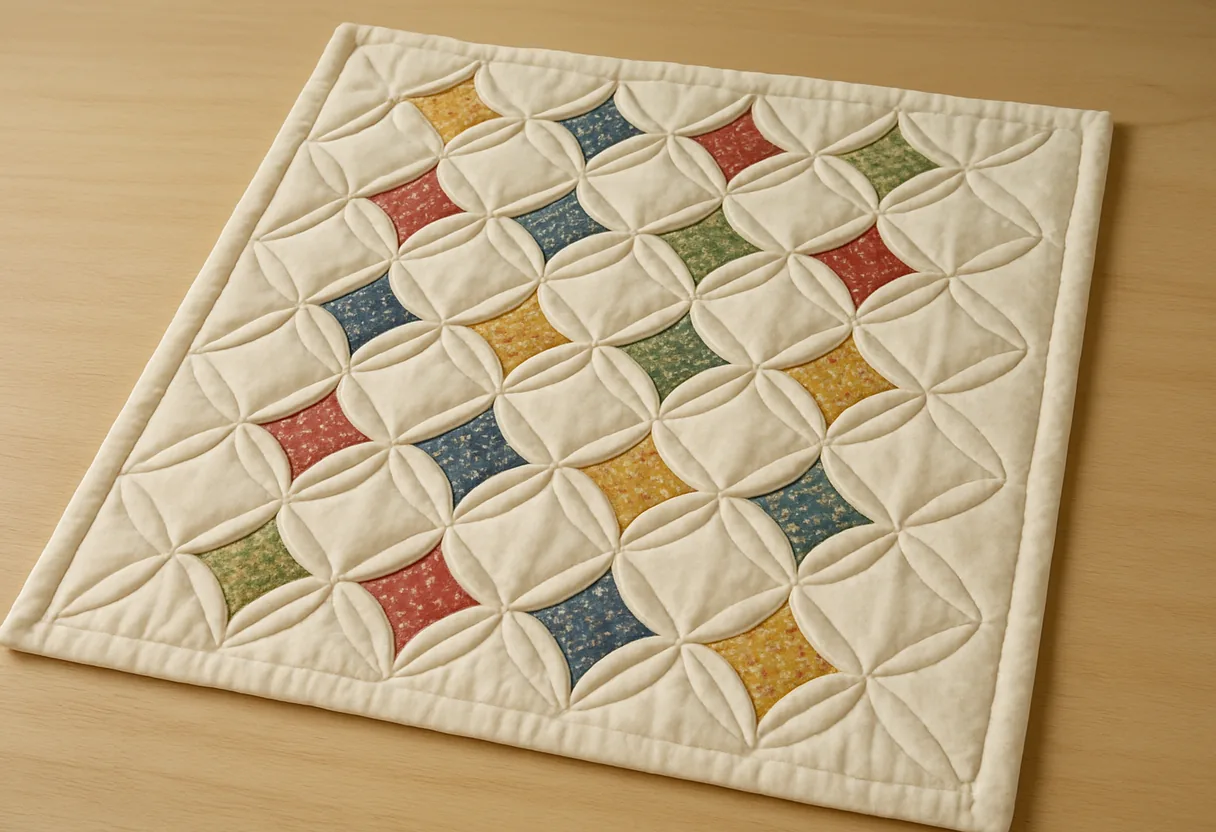 Cathedral window quiltThe folded block step by step, with a size chart, the window math and a 17-inch pillow worked out.