How a fat quarter is cut
Quilting cotton comes on bolts about 42 to 44 inches wide. A shop cuts half a yard (18 inches) across the full width, then cuts that piece in half along the fold. Each half is a fat quarter: 18 inches one way and half the bolt width the other way, so 21 to 22 inches.
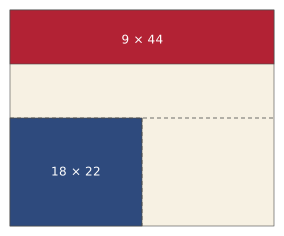
The exact size depends on the bolt and on how straight the shop cuts. Fat Quarter Shop lists its fat quarters as 18 × 21 inches; Bear Creek Quilting Company says approximately 18 × 22. Once you trim off the selvage and straighten the edges, plan on a usable piece close to 18 × 21, and sometimes a little less. That's why the cutting chart below only counts pieces that still fit a short fat quarter of 17½ × 20½ inches.
Fat quarter, long quarter or fat eighth?
| Cut | Size (in) | Good for |
|---|---|---|
| Fat quarter | 18 × 21 to 22 | Squares up to 10 in, appliqué, bricks, scrappy blocks |
| Long quarter (regular ¼ yd) | 9 × 42 to 44 | Long strips: sashing, borders on small quilts, binding |
| Fat eighth | 9 × 21 to 22 | Small scrappy pieces; Fat Quarter Shop lists 9 × 21 |
| Long eighth | 4½ × 42 to 44 | One wide strip; rarely the better buy |
Pick the long quarter when you need length. A 2½-inch binding strip cut from a long quarter runs the full 42 inches or so; the same strip from a fat quarter is only 21. Pick the fat quarter for everything else, because almost every common quilt patch fits it with room to spare.
What you can cut from one fat quarter
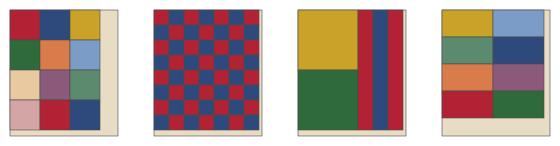
Every count in this chart was worked out for an 18 × 21 inch piece and checked again for a short 17½ × 20½ inch one. Where the full-size piece gives more, the extra is in the last column.
| Cut size (in) | Pieces per fat quarter | How to cut | If yours is a full 18 × 21 |
|---|---|---|---|
| 2½ square | 56 | 7 strips 2½ in wide along the long side, 8 squares each | Same |
| 2½ × 20 strip | 7 | Cut across the 18-in side | Same |
| 3½ square | 25 | 5 strips, 5 squares each | 30 (6 per strip) with no room for error |
| 4½ square | 12 | 3 strips, 4 squares each | 16 |
| 4½ × 8½ brick | 8 | 4 strips 4½ in wide, 2 bricks each | Same |
| 5 square (charm size) | 12 | 3 across, 4 down | Same |
| 6½ square | 6 | 2 across, 3 down | Same |
| 10 square (layer cake size) | 2 | Stacked on one side, then three 2½ × 20 in strips from the rest | Same |
Twelve 5-inch squares turn into 24 half-square triangles with the two-at-a-time method in our half-square triangle guide.
Cutting a fat quarter without waste
- Press it flat. Fat quarters come folded in quarters, and the creases throw off a ruler.
- Trim the selvage edge, the tightly woven edge with the printing on it, and square up one 18-inch side and one long side.
- Decide which way the strips run. For squares it doesn't matter much. For bricks or rectangles, cut the strips along the 21-inch side so each strip is about 18 inches long, which gives two 8½-inch bricks with almost nothing left.
- Keep the leftovers. A 2½ × 20 inch strip is useful for scrappy binding, and small squares go into a postage stamp quilt.
A 6 × 24 inch ruler and a 45 mm rotary cutter handle all of this; our beginner supply list covers the rest.
How many fat quarters do you need?
The easiest way to estimate is to pick one square size and count. These numbers are for a quilt top made only of squares sewn edge to edge, with no border. Borders, binding and backing are extra.
| Quilt top | Squares | Fat quarters |
|---|---|---|
| Baby, 36 × 48 in, 6-in finished squares (cut 6½) | 48 | 8 |
| Throw, 54 × 72 in, 6-in finished squares | 108 | 18 |
| Twin top, 66 × 90 in, 6-in finished squares | 165 | 28 |
| Baby, 36 × 45 in, 4½-in finished squares (cut 5) | 80 | 7 |
| Throw, 54 × 72 in, 4½-in finished squares | 192 | 16 |
Smaller squares waste less, which is why the 5-inch version of the throw needs two fewer fat quarters than the 6½-inch version. For a full fabric estimate with borders and backing, StitchTested has a fabric calculator, and its quilt size chart lists standard bed sizes.
Patterns on this site that use fat quarters
- Fat quarter brick quilt: 14 fat quarters cut into 4 × 8 inch bricks for a 56 × 64 inch throw, with nothing to match.
- Easy baby quilt: 6-inch squares from 8 fat quarters.
- Postage stamp scrap quilt: a good home for the 2½-inch squares left over from other projects.
Buying fat quarters
Shops sell them one at a time and in bundles. A bundle from one fabric collection usually holds one of each print in the line, so the colors already go together (the precut fabric guide covers bundles and the other precuts). A bundle is the low-effort way to get a coordinated scrappy quilt.
A few things to check:
- Measure a fat quarter from a new shop before you cut a whole stack. If it's under 18 inches on the short side after trimming, the cutting chart above still works, but patterns written for a full 18 × 22 may not.
- Prewash fat quarters only if you prewash all your fabric. Washing makes them shrink and fray a little, so wash before cutting, never after.
- For a memory or memorial quilt that mixes clothing with quilting cotton, fat quarters are a handy way to add a few coordinating solids without buying yardage. See making a memory quilt from clothes.
You might also like
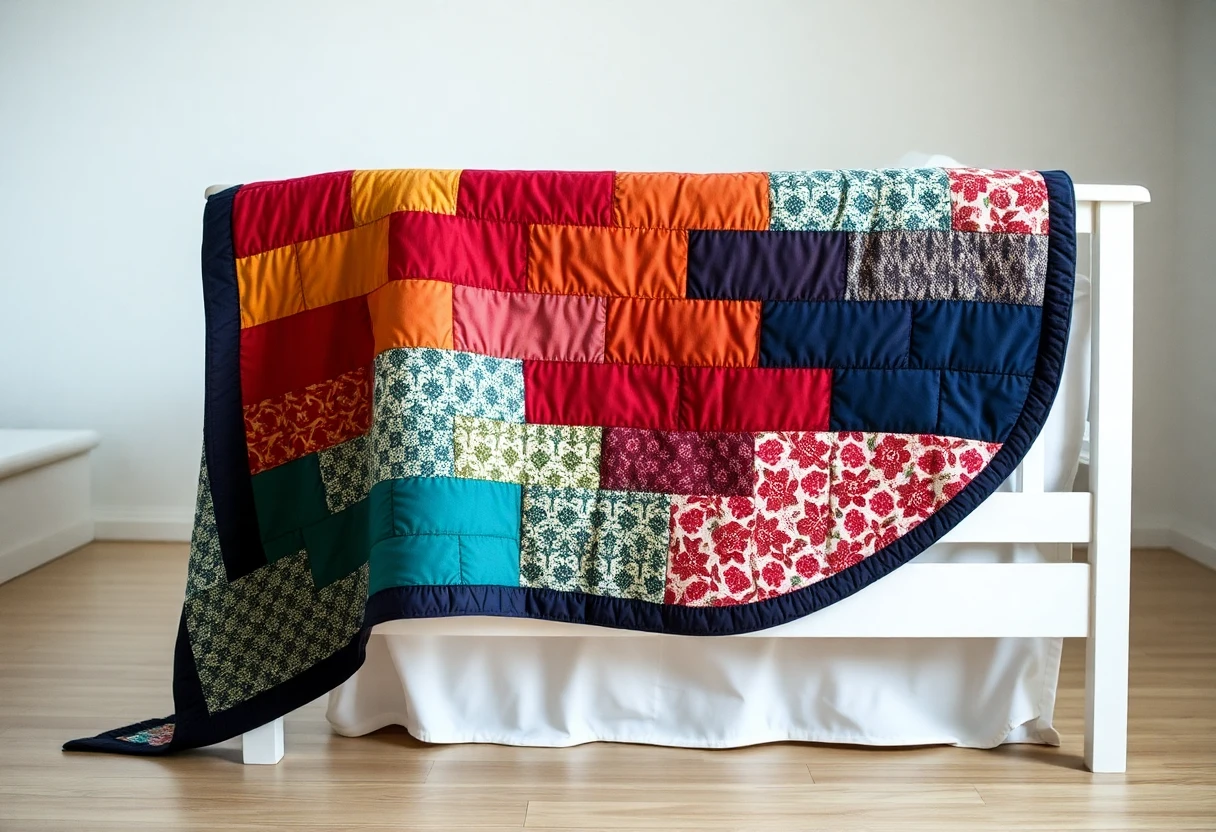 Fat quarter brick quilt14 fat quarters cut into bricks, offset rows, no seams to match, 56 x 64 in.
 How many squares from a fat quarter? Fabric yield calculatorHow many pieces you can cut from a fat quarter, precut or yard, and how many to buy.
 Ohio star quilt blockAn eight-point star from quarter-square triangles, cut for 6, 9 and 12 inch blocks.
 Easy baby quilt48 big squares from 8 fat quarters, 36 x 48 in, with crib, toddler and throw sizes.