Calculator
Turn on JavaScript to use the calculator, or follow the worked examples in how to make a quilt from a fabric panel.
How the math works
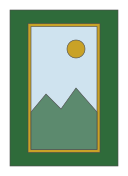
Everything starts from the trimmed panel. Its finished size is the trimmed size less the ½ inch that goes into the seams (a quarter inch on each side).
| What | Formula | 36 × 44 panel trimmed to 35½ × 42½, to 49 × 56 |
|---|---|---|
| Panel, finished | trimmed − ½ in | 35 × 42 in |
| Side borders, each | (target width − panel finished width) ÷ 2 | (49 − 35) ÷ 2 = 7 in |
| Top and bottom, each | (target length − panel finished length) ÷ 2 | (56 − 42) ÷ 2 = 7 in |
| Outer border | border − inner border | 7 − 1 = 6 in |
| Strip width to cut | finished width + ½ in | inner 1½ in, outer 6½ in |
| Side strip length | current length of the quilt | inner 42½ in, outer 44½ in |
| Top and bottom strip length | current width, after the sides are on | inner 37½ in, outer 49½ in |
Sides go on first, then top and bottom, for each border in turn. That order is why the top and bottom strips are longer: they cover the ends of the side strips.
For the fabric, the calculator groups strips of the same width. Pieces up to 40 inches can share a strip; longer pieces come from strips joined end to end, allowing half an inch for each join. Yardage is strips × strip width + 2 inches to straighten, rounded up to the next eighth of a yard. Binding is the perimeter plus 10 inches, in 2½-inch strips. For the first example in our fabric panel guide, that gives five 1½-inch strips (⅜ yd) for the inner border, five 6½-inch strips (1 yd) for the outer border and six binding strips (½ yd), the same as the guide.
Even borders or unequal borders?
Most panels are much longer than they are wide (24 × 44 is a common size). Equal borders keep that long shape. With the guide's second example, a panel trimmed to 23½ × 42½ with 7-inch borders all around comes out at 37 × 56, still long and thin. Choose "sized to reach my width and length" and ask for 36 × 52 instead, and the calculator makes the sides 6½ inches and the top and bottom 5. The quilt is nearer a crib shape and needs less fabric.
When you pick "the same width all around," the calculator sizes the border from your target width and tells you the length that results.
Tips before you cut
- Square the panel to the printed picture, not to the fabric's edge. The fabric panel guide covers measuring the diagonals and fixing a skewed print.
- Measure through the center before cutting each pair of strips, and use that number if it differs from the calculator's. A panel can stretch at the edges, and borders cut to the edge come out wavy.
- Pin the middle and both ends of each strip before sewing, and ease in any small difference.
- A 1-inch inner border pulled from a color in the picture frames it the way a mat frames a print.
- If the borders come out very wide (more than about a third of the panel's width), think about a row of simple blocks or a pieced border instead. The how many blocks calculator works out how many fit.
Common mistakes
| Mistake | Fix |
|---|---|
| Entering the panel's label size (36 × 44) instead of the trimmed size | Trim first, measure, then enter |
| Cutting all four strips the same length | Sides first, then measure again for the top and bottom |
| Forgetting the seam allowance on the panel | The panel finishes ½ in smaller than you trimmed it; the calculator takes it off |
| A printed frame line disappears into the seam | Leave at least ¼ in beyond any line you want to show when trimming |
Related pages
The fabric panel quilt guide covers squaring, quilting around the printed picture and the two worked examples in full. How to add borders to a quilt covers the sewing. For backing, StitchTested's binding and backing calculator works from the finished size this calculator gives you. A baby-animal panel at one of the charity quilt sizes makes a quick donation quilt.
You might also like
 Quilt border calculatorStrip lengths and yardage for up to five borders, butted or mitered.
 Log cabin block calculatorEvery log length in sewing order and the yardage, for log cabin and courthouse steps.
 Hexagon template generatorTrue-size hexagon sheets for paper piecing, with a count and fabric calculator for rosettes and whole quilts.
 Quilt sashing calculatorEvery sashing strip and cornerstone to cut, with yardage for each.